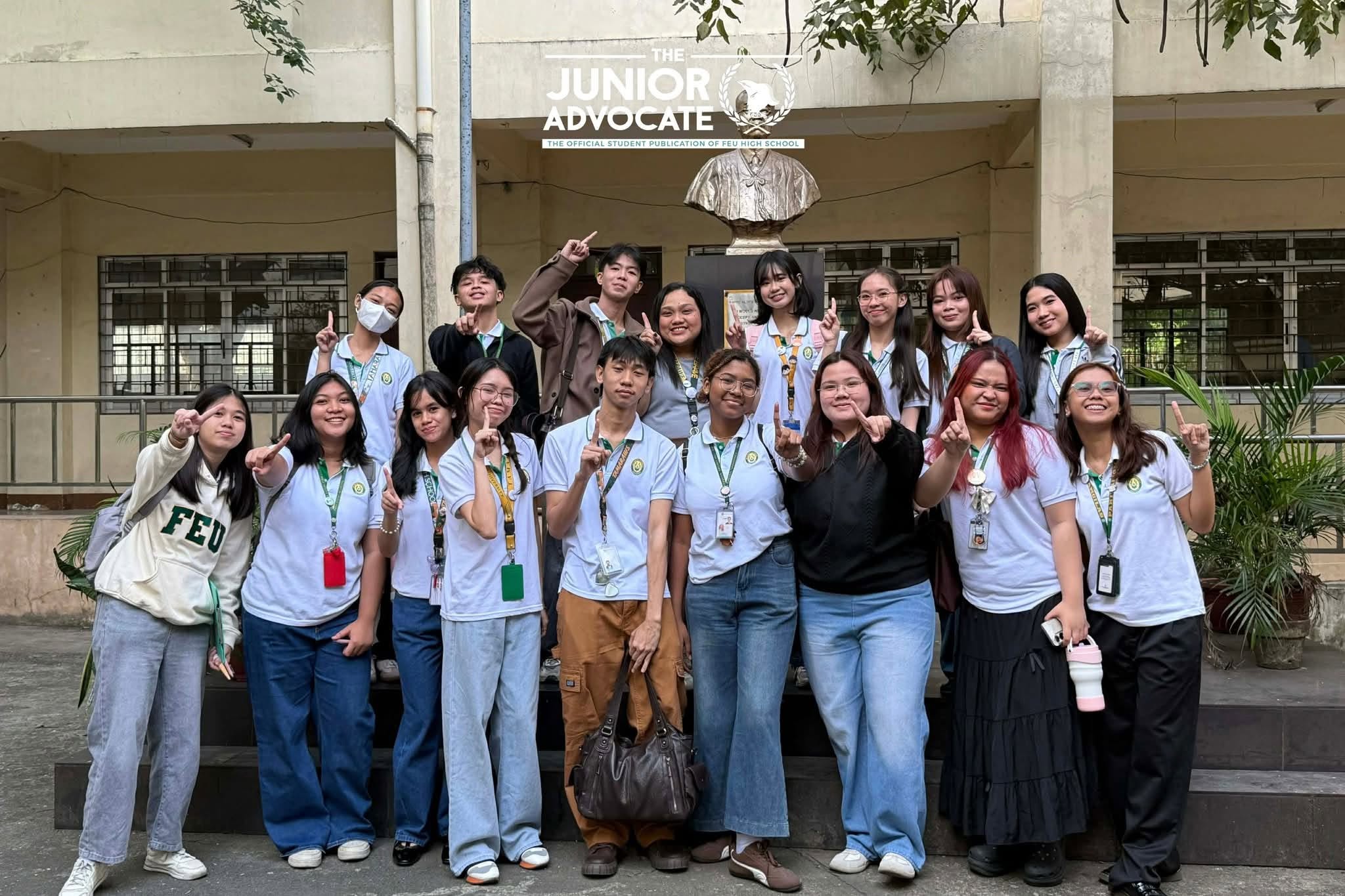
From breaking school news to making its mark to the national stage, The Junior Advocate (TJA) has proven that the pen is mightier than ever.
A campus publication does more than report what happens in school. It records experiences, raises questions, and gives students a platform to tell stories that matter to their community. At FEU High School, The Junior Advocate serves as the official student publication, documenting the school’s milestones, achievements, challenges, and everyday experiences through the eyes and voices of its student journalists.
Behind every story is a newsroom where young writers and creatives learn that journalism is more than putting words on a page. It is a discipline built on curiosity, responsibility, and integrity.
TJA members hone their skills across news, feature, and editorial writing, sports journalism, photojournalism, illustration, layout and design, broadcasting, and multimedia production. But beyond mastering these disciplines, they learn lessons that extend far beyond the newsroom: how to show up, ask thoughtful and relevant questions, verify information, meet deadlines, own their actions, and make things right when errors occur.
That commitment to responsible journalism did not go unnoticed. It recently culminated in a historic milestone: FEU High School was named the Top Performing School in Secondary Journalism for S.Y. 2025–2026 in the Division of Manila. The recognition reflects the collective dedication and performance of The Junior Advocate and its student journalists throughout the school year, from division-level to regional and national press conferences.
From Manila to the National Stage
The journey began at the Division Schools Press Conference (DSPC), where The Junior Advocate represented FEU High School in the Division of Manila level. Competing against campus journalists from schools within the division, the publication produced multiple individual and group event placements, with 12 qualifiers advancing to the Regional Schools Press Conference (RSPC), including eight qualifiers for individual categories and four for group categories.
The competition then expanded to the National Capital Region (NCR) at the RSPC. The qualifiers faced campus journalists from across the region, bringing the skills and experience they gained from the division level into a wider field of competition.
From the RSPC, Welsh Kendrick Osorio, FEU High School’s qualifier in Sports Writing, advanced to the National Schools Press Conference (NSPC) while Denhille Trisha Brillantes, the publication’s TV Broadcasting-English female anchor, was selected to join the NCR representative team for TV Broadcasting.

At the NSPC, campus journalists from across the Philippines competed at the national level. Osorio earned 2nd place in Sports Writing, while the TV Broadcasting team that included Brillantes placed 5th.
For Sportswriter Osorio, reaching the national stage was the result of preparation that began long before the competitions themselves. He regularly read articles, studied different writing styles, refined his own voice, and applied feedback from every critique and revision.
As he puts it, “growth in journalism does not happen overnight or only during competitions; it happens in the quiet moments after every correction, every rewritten lead, and every realization that there is always something to improve.”
The support of FEU High School also played a role in that preparation. As part of an accredited UAAP media publication, he experienced an environment where campus journalism was treated as meaningful and professional work. Training spaces, workshops, preparation time, and the trust given to campus journalists provided opportunities for him to learn, improve, and become more observant, responsible, and intentional with his writing.
Representing FEU High School and NCR at the national level also became a personal milestone for Osorio, who had previously reached the NSPC in earlier school years. More than completing a personal goal before graduation, the experience reinforced his view of journalism that goes beyond competition.

For him, reaching the national stage became a lesson in consistency, humility, and trusting the process. It reinforced his belief that journalism is not about sounding the smartest in the room, but about telling stories in a way that is honest, observant, and human.
From the Division of Manila to NCR, and ultimately to the national stage, the academic year 2025–2026 competition season gave The Junior Advocate campus journalists the opportunity to test their skills at increasingly broader levels of competition.
A Recognition Across Three Levels
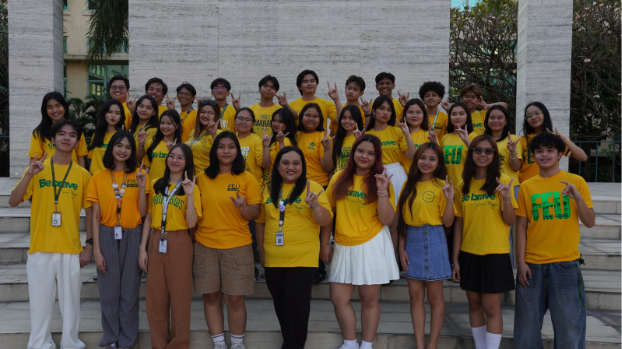
The results of this multi-tiered journey contributed to FEU High School being recognized as the Top Performing School in Secondary Journalism for S.Y. 2025–2026 in the Division of Manila.
The recognition celebrates the strong performance of FEU High School’s campus journalists throughout the competition season. Their achievements across individual and group categories reflect the skill, preparation, and commitment they brought to every level of competition. Behind this achievement are the campus journalists who competed and represented the school, the publication adviser, coaches, and trainers who guided them, and the FEU High School community that supported their journey.
For The Junior Advocate, being named Top Performing School marks a significant milestone in its pursuit of journalistic excellence. But for the campus journalists behind the bylines, the recognition carries meaning that goes far beyond certificates and rankings.
Associate Editor Julleon Marie Aranda noted that the recognition is a reminder of the responsibility that comes with journalism. Beyond the awards, it represents the stories the publication chose to tell, and the voices it chose to amplify.
“It further intensifies our commitment to be brave in the face of truth, to ask difficult questions, challenge what needs to be challenged, and give space to stories that deserve to be heard,” Aranda said.
Managing Editor Paula Angela Apolinar, who previously experienced competitions as a junior staffer, emphasized the weight of carrying forward the standards set by prior editorial boards.
“The success achieved last year is now in our hands, and we are determined to uphold it,” Apolinar said.
For Jennelle Cabuhat, Literary Officer-in-Charge, the award proves that every story told by the newsroom mattered.
“Behind every byline are moments of doubt, growth, revisions, and quiet dedication that often go unseen,” Cabuhat said. “Being part of The Junior Advocate has taught me that journalism is more than writing—it’s listening, understanding, and carrying the voices of others with care.”
Together, their reflections show what the recognition means beyond the rankings: a record of work accomplished, a responsibility to carry forward, and a reminder of why student journalism matters.
Beyond the Competition
The awards are an important part of The Junior Advocate’s story, but they are not the whole story.
Throughout the school year, the publication remains active by reporting campus developments, covering school events, highlighting Tamaraw achievements, and serving as a student watchdog that keeps the community informed.

For aspiring journalists, the members of The Junior Advocate offer a simple message: do not wait to become fearless before you begin. Start where you are, stay curious, ask difficult questions, write what matters, and allow courage to grow along the way.
As Aranda put it, “Ang takot ay imbitasyon para maging matapang.”
Being named the Top Performing School in Secondary Journalism for S.Y. 2025–2026 in the Division of Manila marks a significant milestone for The Junior Advocate. But the work continues with new stories to report, new journalists to train, and new voices to amplify.
Guided by bravery and truth, The Junior Advocate continues to tell the stories that matter to the Tamaraw community, because campus journalism is not only about the stories that win awards, but also about those that deserve to be told and remembered.